๐Ÿ”ฌ ADHD Research

Scientific Studies, Evidence & Ongoing Discoveries

๐Ÿง  Overview of ADHD Research

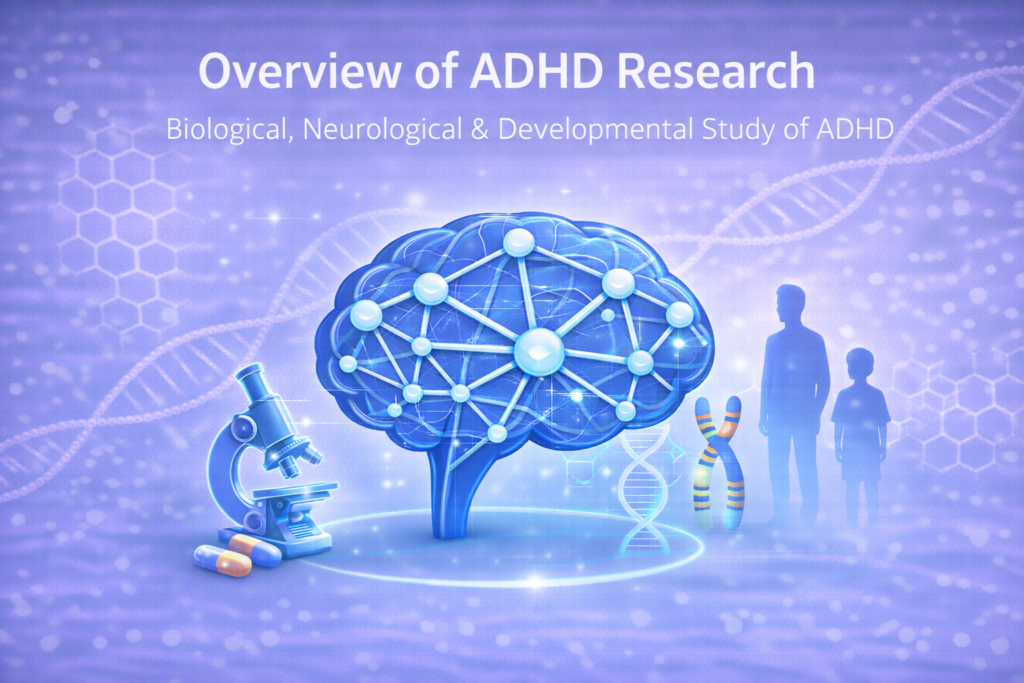
ADHD research focuses on understanding the biological, neurological, and developmental factors that contribute to Attention-Deficit/Hyperactivity Disorder (ADHD). Scientific investigation has established ADHD as a neurodevelopmental condition influenced by brain development, genetics, and environmental factors.

Modern ADHD research combines neuroscience, psychology, genetics, and clinical studies to build an evidence-based understanding of the condition.
Overview of ADHD Research
What Does ADHD Research Study

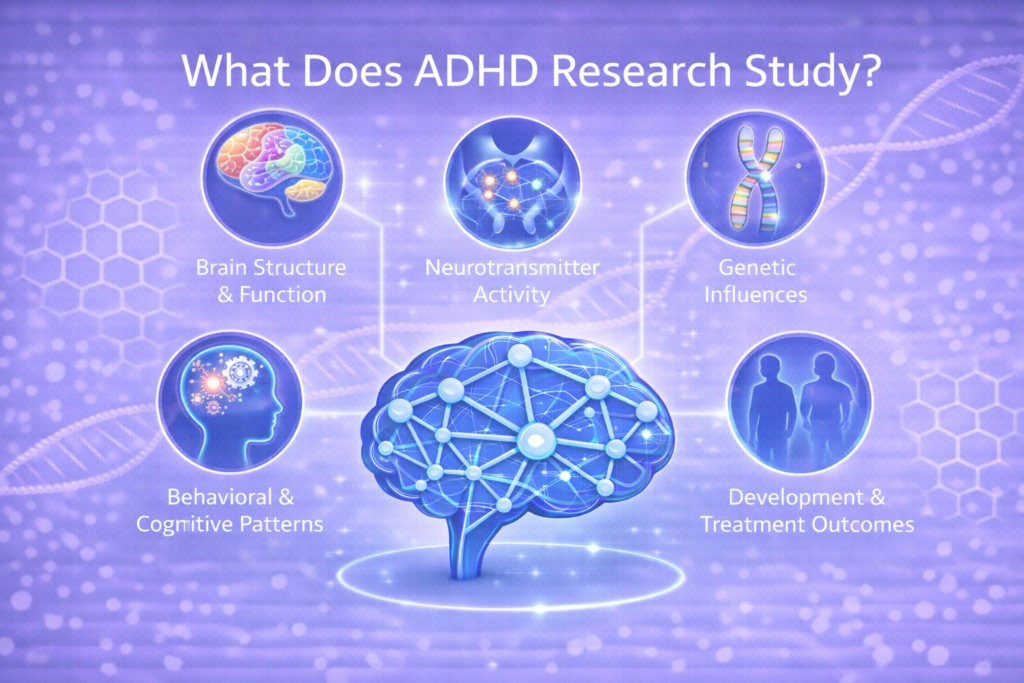
๐Ÿ“Š What Does ADHD Research Study?

ADHD research examines multiple areas, including:

  • Brain structure and function

  • Neurotransmitter activity

  • Genetic influences

  • Behavioral and cognitive patterns

  • Development across childhood and adulthood

  • Treatment outcomes and long-term effects

These research areas help clarify how ADHD presents differently across individuals and life stages.

๐Ÿงฌ Biological & Genetic Research

Scientific studies indicate that ADHD has a strong biological component. Research suggests:

  • ADHD often runs in families

  • Genetic factors influence brain development and neural signaling

  • Multiple genes contribute small effects rather than a single cause

Genetic research helps explain why ADHD symptoms vary widely and why individuals respond differently to treatments.

Biological & Genetic Research
Brain & Cognitive Research

๐Ÿง  Brain & Cognitive Research

Brain imaging and cognitive studies have shown that ADHD is associated with differences in:

  • Attention regulation networks

  • Executive function processing

  • Impulse control mechanisms

  • Neural connectivity and communication

These findings reinforce that ADHD involves measurable differences in how the brain processes information.

๐Ÿงช Clinical Research & Trials

Clinical research plays a key role in evaluating ADHD interventions. Studies assess:

  • Behavioral therapies

  • Educational strategies

  • Medication effectiveness and safety

  • Combined treatment approaches

Clinical trials follow strict scientific and ethical standards to ensure accuracy and participant safety.

Clinical Research & Trials
Medication Research in ADHD

๐Ÿ’Š Medication Research in ADHD

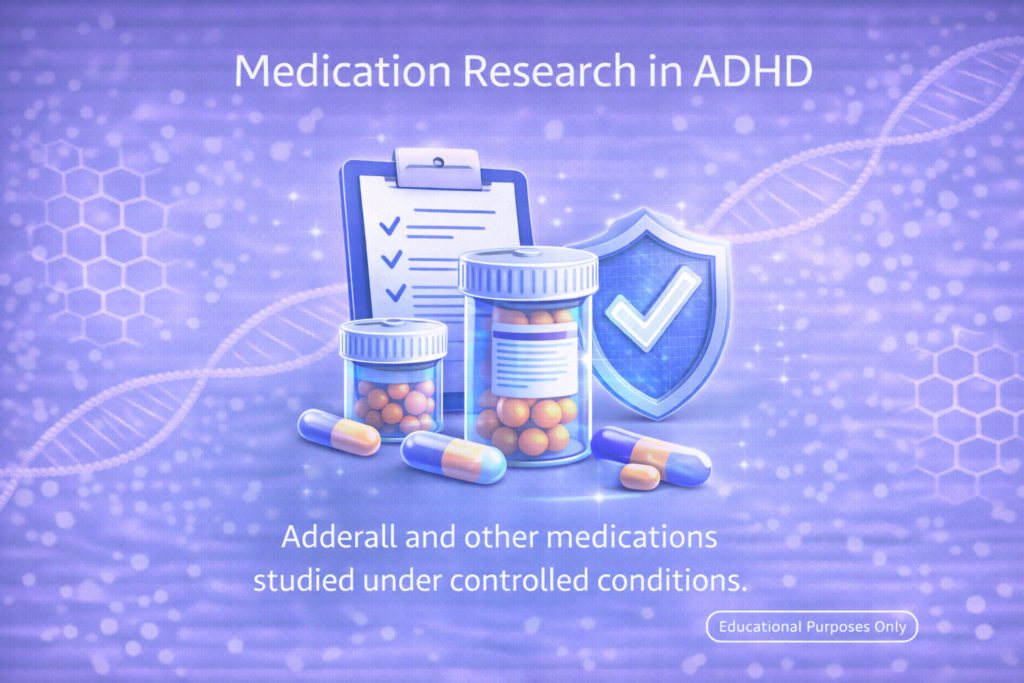
Medication research evaluates how certain treatments affect ADHD symptoms under controlled conditions. Studies focus on:

  • Symptom improvement

  • Cognitive and behavioral outcomes

  • Side-effect profiles

  • Long-term safety and effectiveness

Adderall and other medications are frequently studied in ADHD research, with findings used to inform clinical guidelines.

๐Ÿ“ˆ Evidence-Based Findings

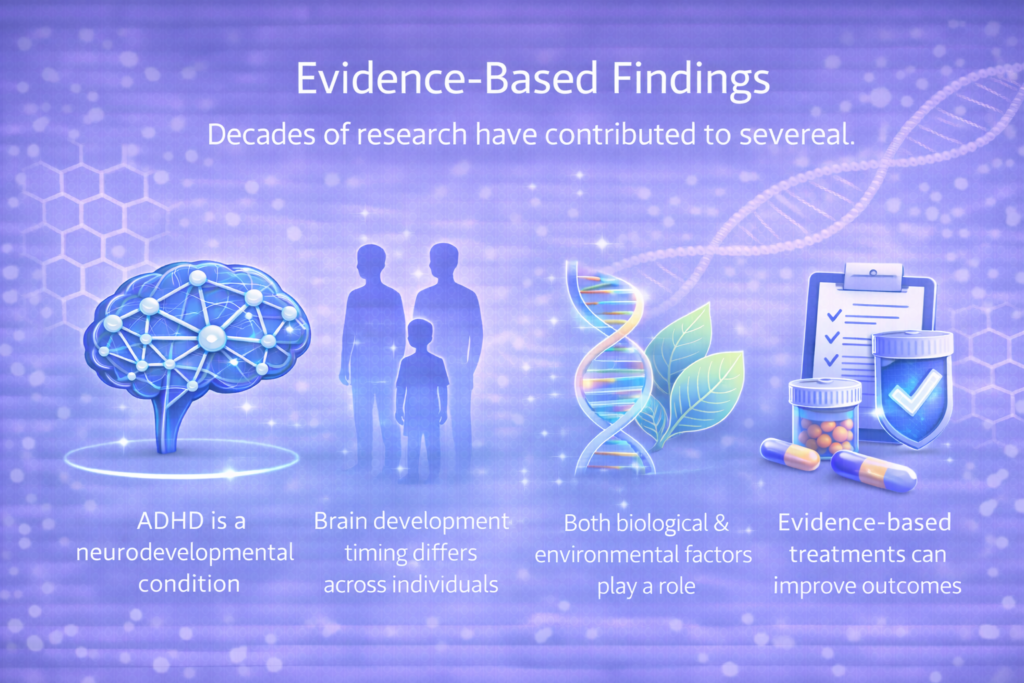
Decades of research have contributed to several well-supported conclusions:

  • ADHD is a neurodevelopmental condition

  • Brain development timing differs across individuals

  • Both biological and environmental factors play a role

  • Evidence-based treatments can improve outcomes

Ongoing research continues to refine understanding and improve care strategies.

Evidence-Based Findings
Ongoing & Future ADHD Research

๐Ÿ”ฌ Ongoing & Future ADHD Research

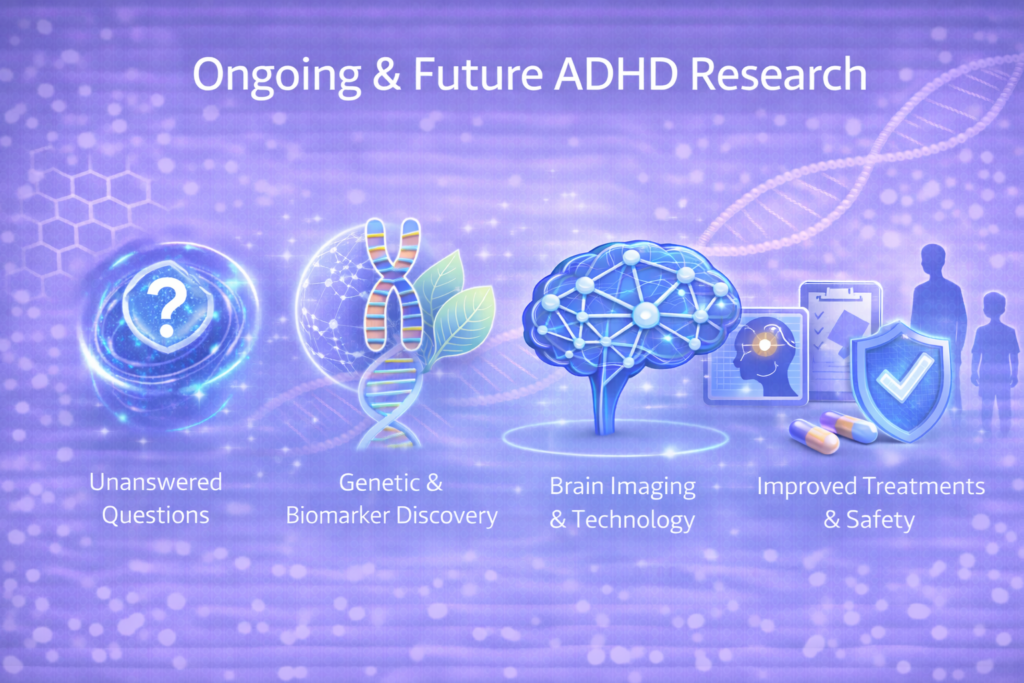
Current ADHD research is exploring:

  • Brain development across the lifespan

  • Personalized treatment approaches

  • Long-term outcomes into adulthood

  • Advances in neuroscience and genetics

Future discoveries aim to enhance diagnostic accuracy and support evidence-based care.

โš ๏ธ Medical Disclaimer

The content on this page is provided for educational and research purposes only.
It is not intended as medical advice, diagnosis, or treatment.
Always consult a licensed healthcare professional for medical guidance.