๐Ÿ’Š Adderall

Research, Clinical Studies & Scientific Understanding

๐Ÿง  Overview of Adderall

Adderall is a prescription stimulant medication that has been extensively studied in the treatment of Attention-Deficit/Hyperactivity Disorder (ADHD). In clinical research, Adderall is examined for its effects on attention regulation, impulse control, and executive function.

At ADHDScienceLab, Adderall is discussed strictly from a research and educational perspective, based on peer-reviewed clinical studies and scientific evidence.

Overview of Adderall
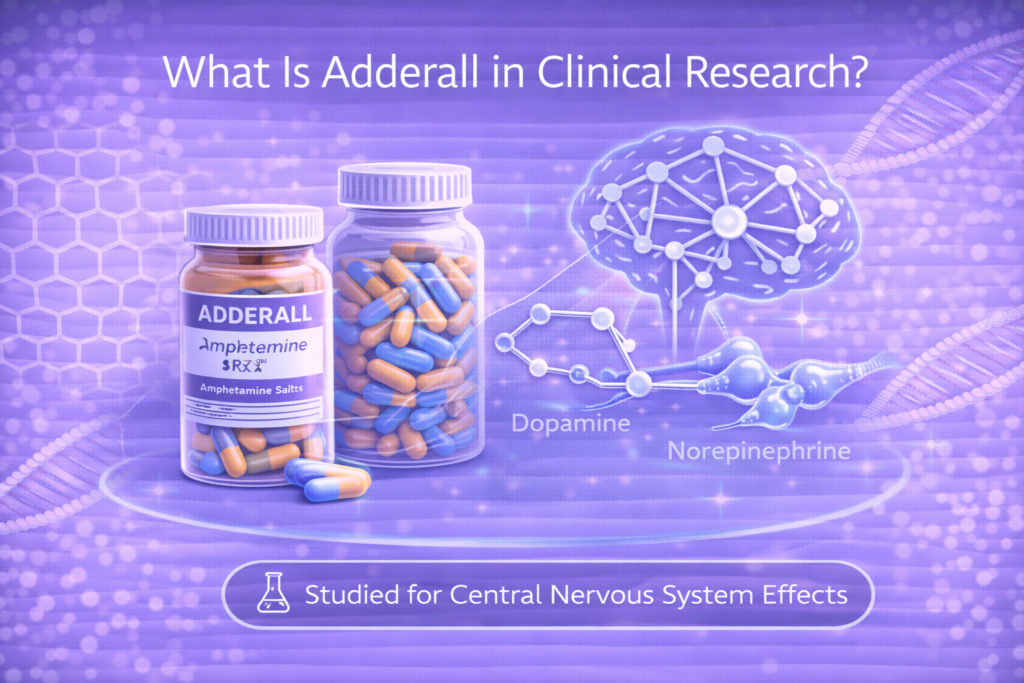
What Is Adderall in Clinical Research

๐Ÿงช What Is Adderall in Clinical Research?

From a scientific standpoint, Adderall is studied as a central nervous system stimulant composed of amphetamine salts. Research focuses on how the medication influences brain signaling involved in attention and cognitive control.

Clinical studies do not evaluate Adderall in isolation but within carefully controlled research frameworks designed to ensure safety, accuracy, and ethical standards.

๐Ÿง  How Adderall Works (Research Perspective)

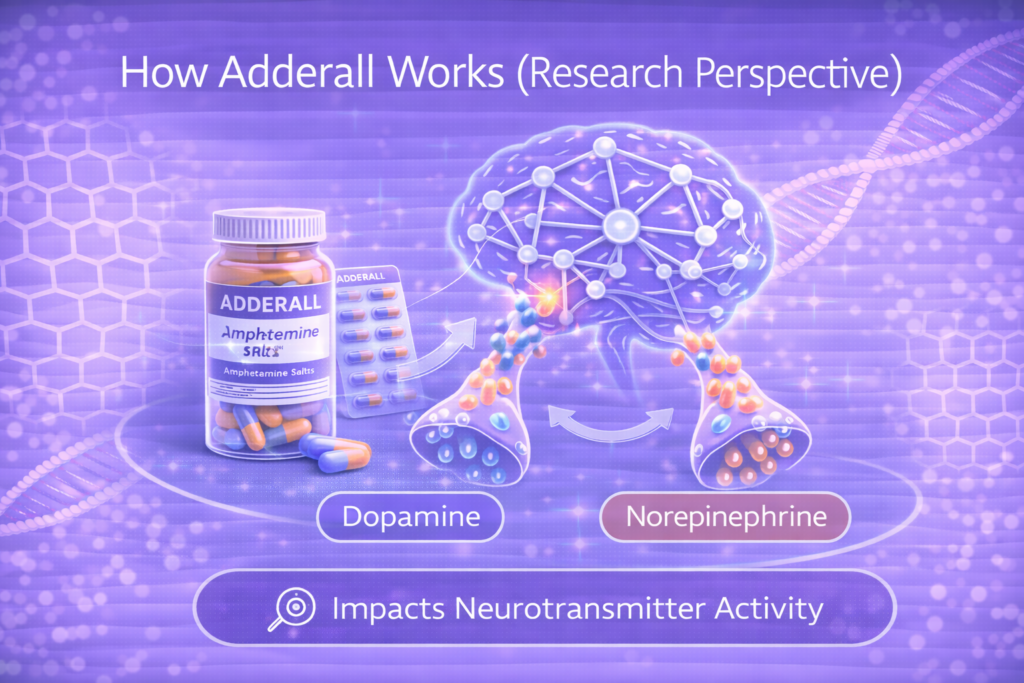
Research indicates that Adderall affects neurotransmitter activity, particularly pathways involving:

  • Dopamine

  • Norepinephrine

These neurotransmitters play a role in attention, motivation, and executive function. Scientific studies examine how Adderall alters neurotransmitter signaling to improve certain ADHD-related symptoms under controlled conditions.

How Adderall Works (Research Perspective)
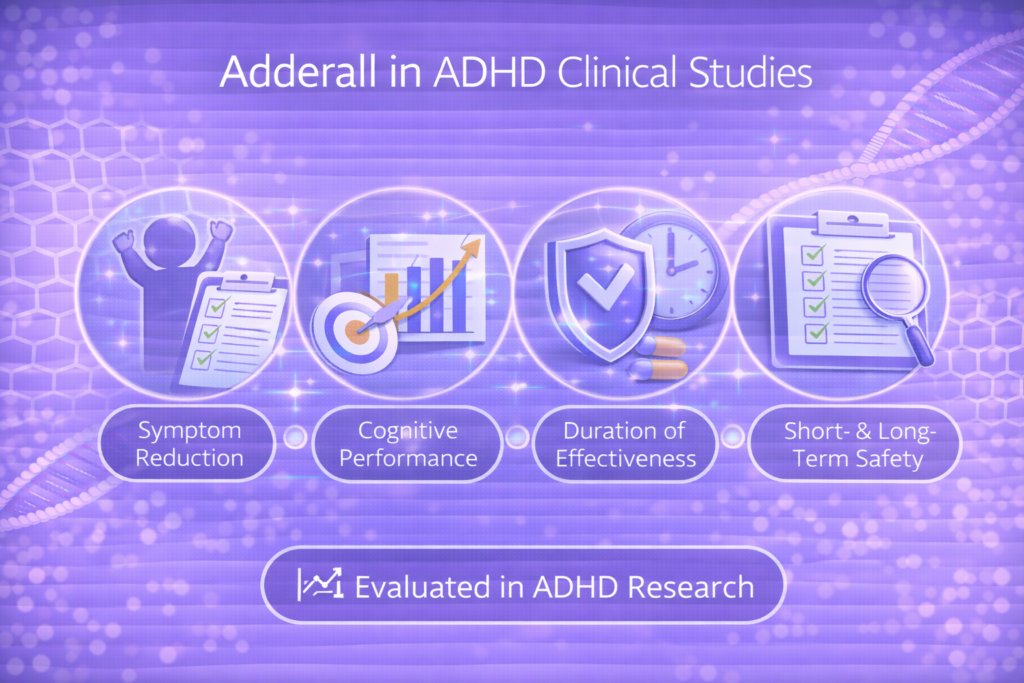
Adderall in ADHD Clinical Studies

๐Ÿ“Š Adderall in ADHD Clinical Studies

Adderall has been included in numerous ADHD clinical studies that evaluate:

  • Symptom reduction

  • Cognitive performance

  • Behavioral outcomes

  • Duration of effectiveness

  • Short- and long-term safety

These studies help inform treatment guidelines and clinical decision-making but do not determine suitability for individual patients.

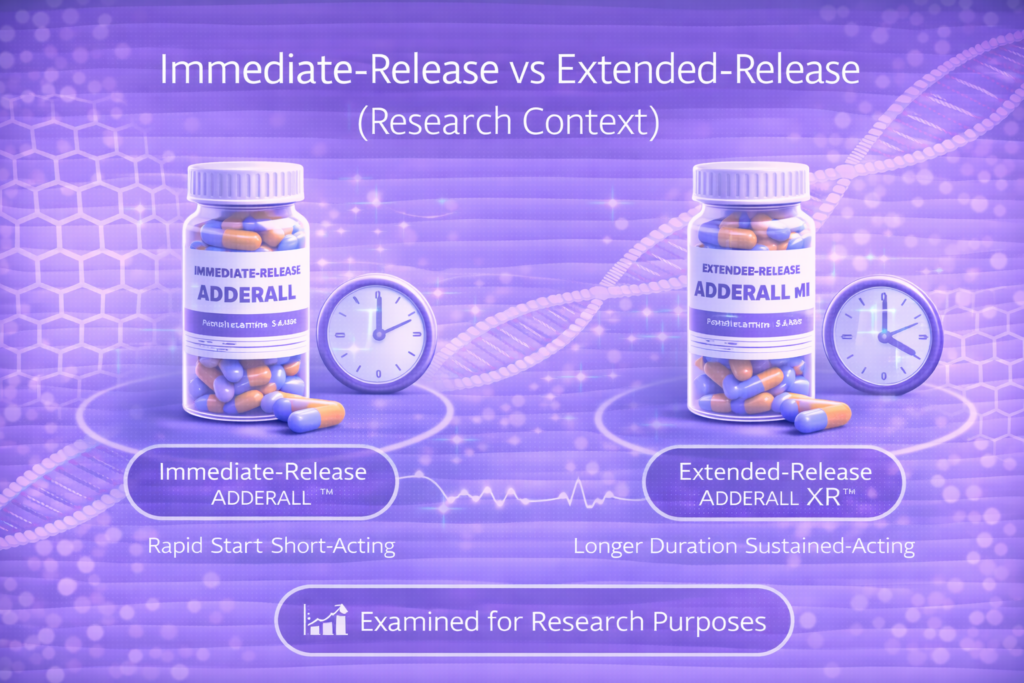
๐Ÿ’Š Immediate-Release vs Extended-Release (Research Context)

Clinical research distinguishes between different formulations of Adderall, often examining:

  • Onset and duration of action

  • Consistency of symptom control

  • Tolerability profiles

These distinctions are evaluated in research settings to understand differences in therapeutic outcomes, not to provide prescribing guidance.

Immediate-Release vs Extended-Release (Research Context)
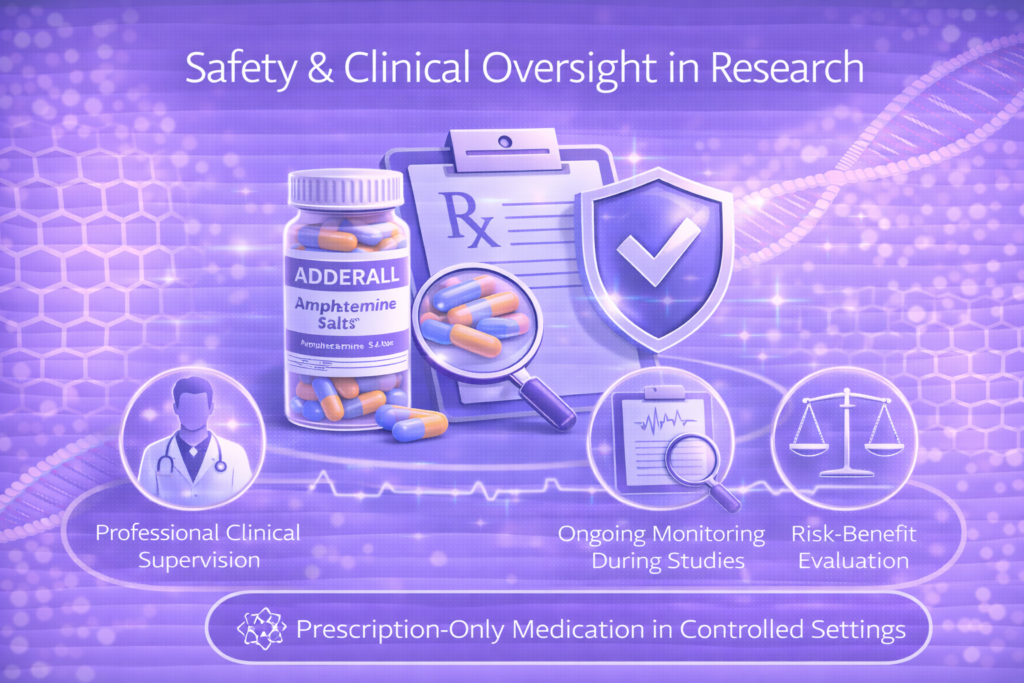
Safety & Clinical Oversight in Research

โš ๏ธ Safety & Clinical Oversight in Research

Research on Adderall emphasizes the importance of:

  • Professional clinical supervision

  • Careful participant screening

  • Ongoing monitoring during studies

  • Risk-benefit evaluation

Adderall is a prescription-only medication and is regulated due to its potential risks when used outside approved clinical settings.

๐Ÿ“ˆ Evidence-Based Findings

Across decades of research, clinical studies have contributed several consistent findings:

  • Adderall can improve ADHD symptoms in some individuals

  • Responses vary widely between patients

  • Effectiveness depends on neurological and developmental factors

  • Monitoring is essential in clinical use

These findings reinforce the importance of individualized, professionally managed care.

Evidence-Based Findings

๐Ÿ”ฌ Ongoing Research on Adderall

Current and future research continues to explore:

  • Long-term outcomes

  • Comparative effectiveness with other ADHD medications

  • Optimal treatment frameworks

  • Safety across different age groups

Ongoing studies contribute to the evolving scientific understanding of ADHD treatment.

Ongoing Research on Adderall

โš ๏ธ Important Medical Disclaimer

The information on this page is provided for educational and research purposes only.
It is not intended as medical advice, diagnosis, or treatment.

Adderall is a prescription medication and should only be used under the supervision of a licensed healthcare professional.

ADHDScienceLab does not sell, prescribe, or promote Adderall or any medication.